
When applying for a new role, the casestudy might be the hardest part of the process. Designers agree that It's time-consuming and exhausting. Since that's unlikely to change, why not lift their spirits during the test assignment?
Recently, I was involved in the hiring process at JetBrains, and I noticed something interesting: while many candidates were clearly talented, some struggled to showcase their abilities through the case studies. To understand their real potential, we often relied on a follow-up test assignment.
That made me pause and rethink the format entirely. Why should a test assignment be limited to a plain text document or a static presentation? And more importantly — how could we design an assignment that truly reflects what we expect from a great designer while making the experience more enjoyable to work on?
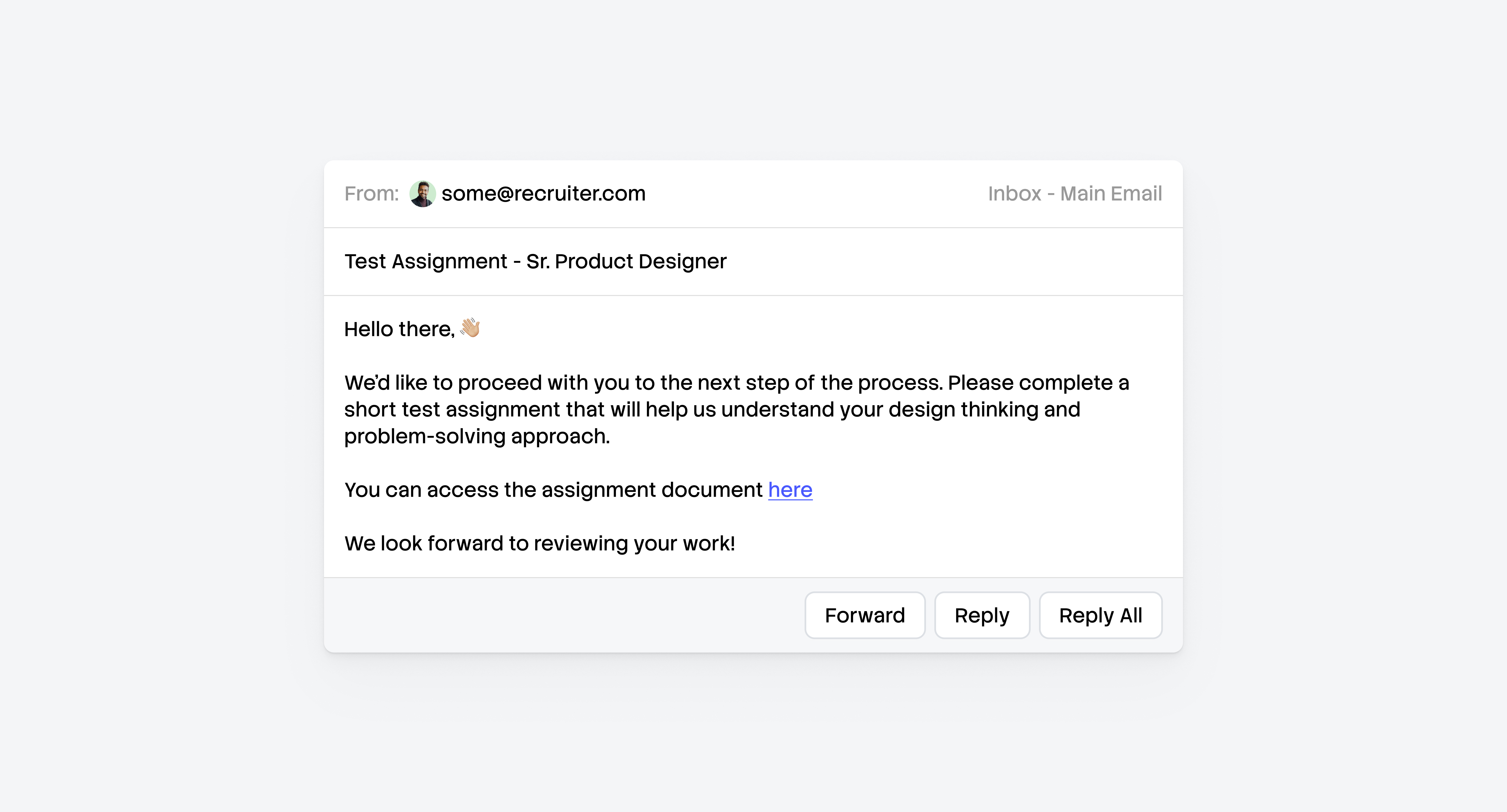
I've always liked creating things that leave an impression, and with this assignment I wanted to raise the bar — to signal that this role demands real craft and to inspire candidates to give their best rather than rushing through mockups. When the team asked me to review the test assignment and process, my initial plan was to lay out the details as card-style frames in a Figma Slides deck.
Once I began sketching, the ideas started building on one another, and a clear theme naturally began to emerge. That's when the concept really clicked: what if the assignment itself felt like a playing-cards game with JetBrains? It would instantly make the experience more engaging, memorable, and fun. I also envisioned a flip-card interaction — a small CSS effect that wasn't possible to achieve in Figma. So I decided to code it directly and turn the whole assignment into a website.
Front Side
Back Side
Before leaving you with the video, here's a quick overview of how the assignment is structured. I started by congratulating the candidate for getting this far — a small gesture to set a positive tone. The assignment itself is split into two parts: first, the context and the high-level overview; second, the detailed tasks they need to complete. And as a final touch, the last screen shows a set of cards sliding in from the bottom — as if it's the candidate's turn to play.
Even if a candidate doesn't get the job, I want them to walk away with a genuine sense of enjoyment — something far more uplifting than the usual test assignment grind. And that's exactly what happened: candidates noticed the craft, appreciated the experience, and told us so. It made the whole process feel more like a healthy competition than a hurdle.
Ultimately, that was the goal — to create something memorable, something that makes JetBrains stand out long after the assignment is over